
By Jonah Shepp Published at: https://nymag.com/ on May 11, 2026
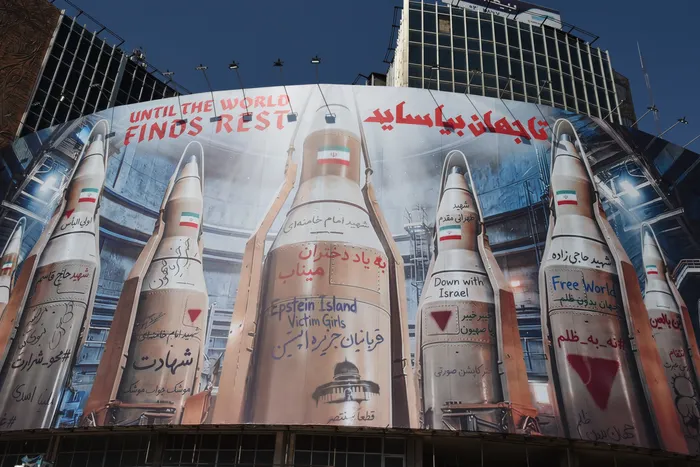
President Donald Trump’s most consistent, and perhaps most compelling, justification for choosing to go to war with Iran was the “imminent threat” of the Iranian regime developing nuclear weapons with which it could not just destroy Israel but the entire Middle East, or cause a nuclear holocaust in Europe, or even threaten the U.S. via the intercontinental ballistic missiles he also alleged Iran was close to developing. He has repeatedly boasted of preventing a nuclear war and has regularly insisted that skyrocketing gas prices and other significant costs of the war are worth it since he saved the world. He even says it to kids. “We would have had Iran with a nuclear weapon, and maybe we wouldn’t all be here right now,” Trump told a group of schoolchildren in the Oval Office last week.
None of this was or is true. Iran was nowhere near developing a nuclear weapon or ICBMs, according to the assessments of the U.S. intelligence community and credible independent experts. Still, Trump has continued to insist that the Iranian nuclear threat was grave and imminent and furthermore that his war has ensured — or is ensuring, or will eventually ensure — the elimination of that threat. But after ten weeks of war, amid a tenuous cease-fire and worsening standoff in the Strait of Hormuz, the prospects for either a military or negotiated resolution to the conflict, let alone one that forestalls further efforts by Iran to develop nuclear weapons, seem dim. In the longer term, the war could amplify the threat of a nuclear-armed Iran by increasing the Iranian regime’s determination to pursue a bomb even while damaging its technical capability to do so.
The full scope of the war’s impact on Iran’s nuclear program is not yet clear. No one disputes that the U.S. air strikes on Iran’s nuclear-enrichment sites this past June pushed back the regime’s timeline for developing a nuclear weapon, but it is believed to remain in possession of over 400 kilograms of highly enriched (60 percent) uranium — enough to build up to ten nuclear weapons. That material is buried in sites deep underground, out of the reach of air strikes, where it would require a long, highly complex, and risky special-forces operation to retrieve and secure. (It would also be difficult if not impossible for Iran to recover in secret.) This is in addition to perhaps 2,100 kilograms of plutonium, which Iran could potentially weaponize and use for another 200 bombs and has not been directly addressed in previous or ongoing talks over the country’s nuclear program. U.S. intelligence assessments have found that the recent U.S. and Israeli air strikes had no significant impact on the timeline for Iran developing a nuclear weapon. The nuclear nonproliferation watchdog ISIS disagrees, estimating that the additional strikes conducted by Israel on nuclear weaponization sites did “further lengthen the time needed to break out to weapon-grade uranium.” No one is arguing that the war has made it easier for Iran to create or obtain a nuclear weapon, but it hasn’t eliminated the possibility, and the massive costs of this war may not have been necessary given the massive blow the U.S. and Israel had already dealt the Iranian nuclear program last year.
Since declaring a cease-fire on April 7 the Trump administration has been attempting to negotiate an end to the war that would put a lid on Iran’s nuclear ambitions, but that goal has been overshadowed by the more immediate problem of Iran’s effective closure of the Strait of Hormuz, which is wreaking havoc on the global economy. Trump and administration officials repeatedly claim that the president holds all the cards in these talks, that Iran’s military capacity has been decimated and its economy is in shambles and will soon collapse thanks to the U.S. blockade on its oil exports through the Persian Gulf, but Iranian leaders clearly see themselves as having the upper hand. Meanwhile, there’s ample evidence that Trump and his main negotiators — his son-in-law Jared Kushner and fellow real-estate mogul Steve Witkoff — don’t understand the complexities of nuclear diplomacy, don’t understand the Iranian regime, and are generally out of their depth.
With the strait as leverage, the Iranians don’t seem to be terribly interested in making concessions on the nuclear issue. The first U.S. proposal, during April’s short-lived peace talks, would reportedly have required Iran to surrender its stockpile of highly enriched uranium to the U.S. and agree to suspend all nuclear activity for 20 years. This offer was a nonstarter. Tehran countered with a proposal to suspend uranium enrichment for five years and keep half of its stockpile under international inspection with the rest going to Russia. When the U.S. rejected that offer, Iran followed up with a face-saving offer to reopen the strait and end the U.S. blockade, while putting off talks on the nuclear issues to a later date, which also went nowhere.
The latest U.S. offer, delivered last week, was reportedly a single-page, 14-point memorandum of understanding that proposed ending the war and launching a 30-day period of negotiations toward a deal to reopen the strait and limit Iran’s nuclear program in exchange for the U.S. gradually ending its blockade, lifting sanctions, and releasing frozen Iranian funds. The U.S. expected Iran to commit in advance to a 12-to-15-year moratorium on nuclear enrichment and to hand over its stockpile of HEU, and allow monitoring by U.N. inspectors, among some other possible requirements.
Last week, Iranian supreme leader Mojtaba Khamenei issued a statement through state TV vowing to protect Iran’s nuclear and missile capabilities. Iran’s latest counterproposal, delivered on Sunday, reportedly offered to negotiate a nuclear deal over 30 days but not until after other key concessions were made to it first. It also reportedly proposed diluting some of its HEU and transferring the rest to a third country that would effectively hold it in escrow and return it if negotiations break down or the U.S. violates the agreement. And Iran apparently rejected the idea of dismantling its nuclear facilities. Trump called Iran’s counterproposal “inappropriate” and “totally unacceptable” and once again raised the specter of resuming the hot war.
Iran has in the past rejected any plan that requires a total suspension of enrichment and insisted on maintaining its right to enrich uranium for peaceful purposes, which is guaranteed in the Nuclear Non-Proliferation Treaty. The JCPOA deal the Obama administration struck with Iran in 2015, which Trump discarded in his first term, had allowed enrichment up to 3.67 percent. Last month’s offer by Iran to suspend enrichment for five years was unprecedented in that regard, and as Slate’s Fred Kaplan pointed out last week, Trump could have taken it and claimed he had struck a better deal than Obama did rather than insisting on a 20-year suspension Iran was never going to agree to. Trump has also previously insisted that Iran be permanently prohibited from enriching any uranium at all, which is what the U.S. demanded in the prewar talks in Geneva. Any potential agreement will not meet Trump’s maximalist demands and will likely be less comprehensive than the Obama-era deal or at best similar to it.
And that’s the good outcome. The worst-case scenario is that Trump’s war has actually made Iran more likely to decide to build a bomb, which its previous leaders had never done. Iran’s reconstituted regime is more radical, more militarized, and more hostile to the U.S. than its predecessors. The unprovoked U.S.-Israeli attacks have given it a stronger motivation to quickly develop a nuclear deterrent against future aggression. The war has also broken the longstanding taboo against closing the Strait of Hormuz, which gives Iran a strategic choke hold over the global economy that it could use to deter foreign attacks while it builds nuclear weapons in secret. And the regime now has a much better understanding of what U.S. and Israeli air strikes can and cannot hit, which will undoubtedly inform any future efforts to protect such secret efforts.
Furthermore, Iran now has no reason to trust the U.S. ever again to uphold its end of any deal after Trump tore up the Obama nuclear deal out of spite and twice launched attacks while in the middle of negotiations. That means Americans in turn should not be too confident that Iran will act in good faith, either. Trump has given the Iranians no reason to do so, instead giving them a powerful incentive to obfuscate their intentions and activities. This broken trust is already playing out in Iran’s cagey responses to Trump’s demands and unwillingness to make irreversible concessions.
Trump’s war may ultimately not just be a disaster for nuclear proliferation in Iran. Whenever and however the war comes to an end, Iran will be left with an unforgivable grievance against the U.S. and more reason, not less, to rapidly pursue a bomb. If Saudi Arabia and other Gulf States believe Iran will acquire one, they may pursue nuclear weapons of their own. And Israel, whose leaders view Iran as a mortal threat and an Iranian nuke as a nightmare that cannot be allowed to happen under any circumstances, may not wait for American permission or support the next time they feel the need to attack. Meanwhile, with the U.S. behaving as an erratic rogue state and an unreliable ally, countries that rely on the American nuclear umbrella, such as South Korea and Japan, might look into their own backup plans. Other countries might look at Iran (and Ukraine) as a cautionary tale and conclude they need bombs of their own to guarantee their security.
Trump says this war was justified at all costs because it protected the world from an imminent nuclear war. But at this point, all it’s really done is set back Iran’s ability to race to a bomb while also killing the Iranian leaders who had been opting against that race. The leaders who replaced them may have different ideas, and the world will be lucky if they conclude that the ability to shut down the Strait of Hormuz is a better deterrent than the literal nuclear option. If not, the only war Trump may end up winning is against nonproliferation — and all it cost was thousands of lives, tens of billions of dollars, a shortage-inducing number of critical munitions, another permanent stain on American credibility and trustworthiness in international affairs, and a global economic disruption the full effects of which are still to come.