
Beijing engaged in ‘unprecedented nuclear expansion’ in recent years that includes ‘hundreds of new missile silos’, senator tells hearing
By – Yuanyue Dang Published at: https://www.scmp.com/ on 14 May 2026
A US Senate hearing on nuclear capabilities issued a warning about China on Wednesday, hours before US President Donald Trump was due to meet Chinese President Xi Jinping.
Senator Roger Wicker, the Mississippi Republican who chairs the Senate Armed Services Committee, said in his opening statement that China has been engaged in an “unprecedented nuclear expansion” in recent years.
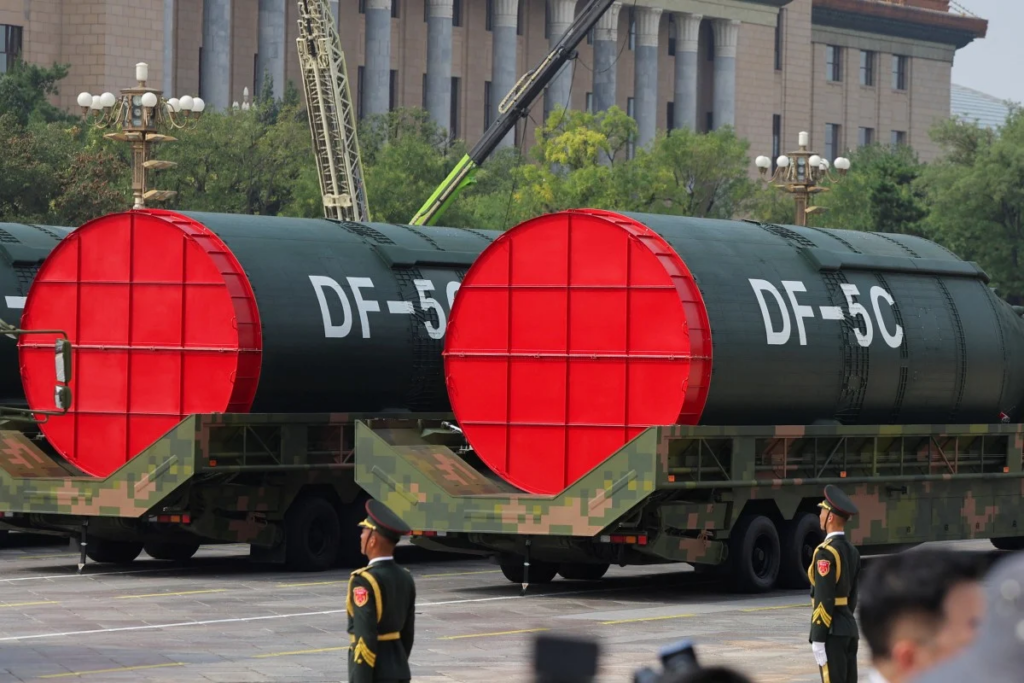
China, Wicker said, had “rapidly constructed hundreds of new missile silos, expanded mobile missile and ballistic missile submarine forces and invested in long-range bombers”, and called this “a strategy designed to surpass the United States in the coming decade”.
Wednesday’s hearing was held to receive testimony on the Department of Energy and National Nuclear Security Administration (NNSA)’s atomic energy defence activities in review of the Defence Authorisation Request for the financial year 2027 and the Future Years Nuclear Security Programme.
The record-breaking US$1.5 trillion defence budget request submitted by the White House last month included funding to modernise the American nuclear arsenal.
“Today, President Trump will meet with President Xi in the next few hours. I suspect the question of whether to resume nuclear testing may arise,” Senator Jack Reed, a Rhode Island Democrat, said.
Trump will hold two rounds of talks with Xi on Thursday and Friday. His delegation includes US Defence Secretary Pete Hegseth, who becomes the first Pentagon chief in decades to join the delegation of a sitting US president’s state visit to China.
Washington has been pressing Beijing to join the New Strategic Arms Reduction Treaty (New Start), the last remaining binding nuclear arms-control accord in force, which expired in February.
China has said repeatedly that it will not join a US-Russia arms-control agreement, as its nuclear arsenal is not as large as the two and has no intention of entering an arms race with any country.
In February, Washington accused Beijing of conducting a secret nuclear test in 2020. Beijing rejected the allegation, calling it a pretext Washington was using to justify resuming its own tests.
Trump said in October that the US would resume nuclear testing, but it remains unclear how far that has progressed. The US said it has not conducted a nuclear explosive test since 1992, and China said it carried out its last nuclear test in 1996.
Any move by Washington to resume testing would mark a significant departure from the de facto moratorium that has held among the five recognised nuclear-weapon states for nearly three decades.
The Chinese embassy in Washington said that China “always keeps its nuclear strength at the minimum level required by national security and will never participate in a nuclear arms race.”
“China stands ready to work with the US to expand cooperation and manage differences in the spirit of equality, respect and mutual benefit, and provide more stability and certainty for a transforming and volatile world,” said spokesperson Liu Pengyu.
At Wednesday’s hearing, Reed told the committee that the administrator of NNSA and the directors of the three US weapons laboratories had, for 25 consecutive years, certified that the US did not need to resume nuclear testing on technical grounds.
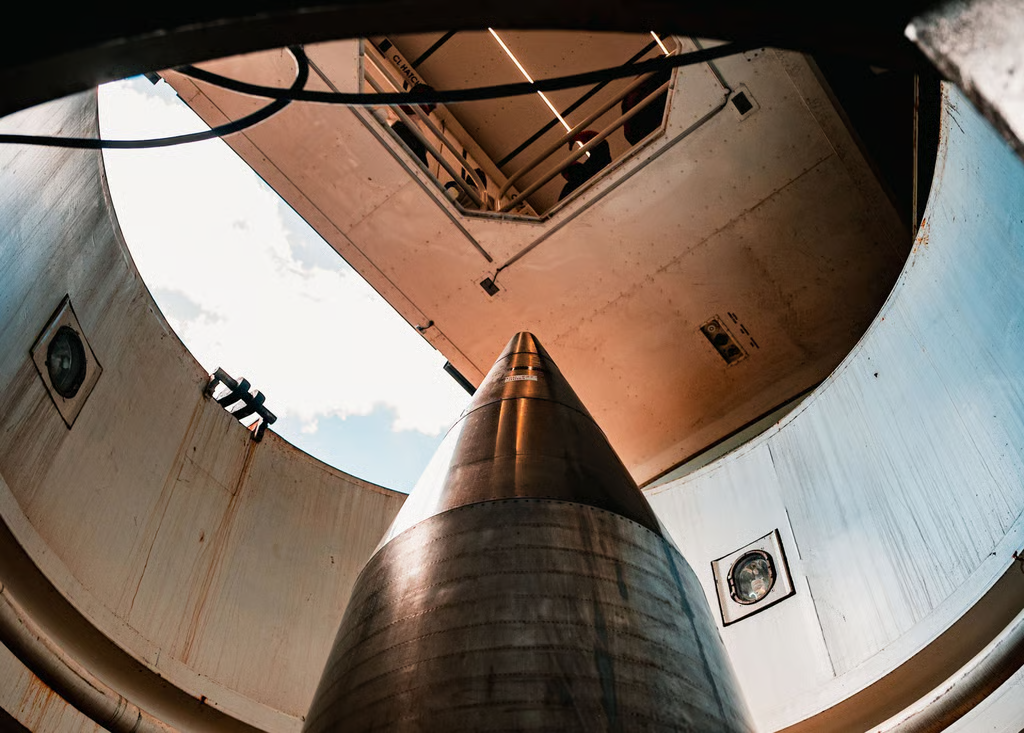
US Energy Secretary Chris Wright, pressed afterwards by Democratic Senator Jacky Rosen of Nevada, home to the Nevada National Security Site where the US conducted nuclear tests, declined to give any such commitment.
Asked whether the Trump administration would commit to not conducting an explosive nuclear test, Wright said: “Ultimately, that decision comes down to the commander in chief.”
When Rosen pushed him to give his view as an engineer and as the cabinet secretary responsible for the nuclear stockpile, Wright said: “To assure the reliability of our weapons, there is no need for explosive testing.”
NNSA administrator Brandon Williams, a former US Navy nuclear submarine officer, took the same position. He told the committee testing was “a multidimensional problem”, with technical, geopolitical and political components.
“All of those decisions rest in the hands of the president, as they should, because all of it relates to deterrence,” Williams said.
The hearing also talked about the US assessment of Iran’s nuclear programme after the war launched in February.
Asked how close Tehran was to being able to weaponise its enriched uranium, Wright said it would be “a small number of weeks”.