
But they can make important progress at their summit, by sharing their threat perceptions about the nuclear escalation risks brought by AI.
Expert comment by: Dr Marion Messmer (Director, International Security Programme)
Published at https://www.chathamhouse.org/ on 13 May 2026
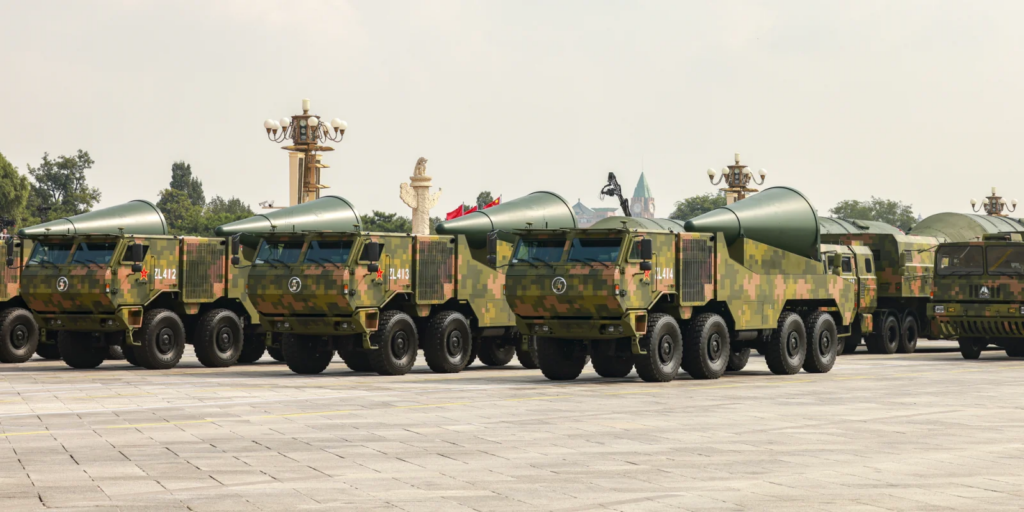
President Donald Trump and President Xi Jinping will discuss some difficult topics at their summit this week – not least of which is the issue of nuclear weapons. China is reported to be growing and modernizing its nuclear arsenal on a scale unlike any other signatory to the Treaty on the Non-Proliferation of Nuclear Weapons. At the same time, the US’s Golden Dome missile defence project, announced by President Trump in 2025, threatens to fuel a new arms race.
US negotiators want to discuss the increase in Chinese nuclear numbers. But China has already said that it will not do so. Any agreement on nuclear limits at this summit is therefore highly unlikely. Nor even is discussion of Chinese nuclear expansion plans. However, despite tensions between the two powers, there are areas where progress could be made.
One way to approach strategic topics could be for one or both countries to share their threat assessments of new military systems and technologies – and how investment in them informs their concerns about pathways to nuclear escalation.
Either side could share their analysis of specific systems – particularly relating to artificial intelligence – and how they interpret their risk potential. The other country could then comment on or correct these assumptions. That could be an important first step towards beginning a strategic stability dialogue.
A 2024 statement by President Xi Jinping and President Joe Biden on keeping AI out of nuclear launch decisions was helpful, reducing concerns that major nuclear powers might consider automating those decisions. Perhaps more importantly, it demonstrated that agreement was possible among major powers on this topic. Trump and Xi could reaffirm this commitment – and perhaps go further.
That in turn could make an important contribution to the Non-Proliferation Treaty review currently underway in New York, building on reports of an emerging consensus at the conference.
An AI hotline
The Trump administration is reportedly willing to talk about AI at the summit. That creates room to broaden discussion beyond the role of AI in nuclear launch decisions.
The US and China could discuss AI risks in escalation more generally, including how to handle AI errors: concerns are rising about the additional risks that AI-human interfacing might introduce into decision-making.
These are new risks, and Washington and Beijing should discuss how to add crisis communication about an AI-caused emergency to their crisis communication protocols and exercise patterns. If the US and China were able to address this at the summit, it could lead to exploring an ‘AI hotline’ – as has already been suggested by the US summit team.
Space
Over the last decade, space issues have, on and off, provided an area for dialogue between the US and China. Partly that is because dialogue on space contained fewer historic tensions, and in part because the domain was recognized as ‘global commons’.
But, as both states have invested more heavily in their space-based capabilities, and space-based enablers have become more central to modern warfare, dialogue on outer space has taken on a new strategic significance.
The US is concerned about China’s space capabilities and whether it is planning to station weapons in space. China is concerned about Golden Dome. Discussing threats emerging from space-based systems, and maintaining space as a global common good, could once again provide an opportunity to tackle strategic questions without reference to nuclear stockpiles.
Problem areas
There are a number of thorny issues that could intensify tensions between the superpowers, hindering progress on nuclear issues. The US would like China to stop its material support for Iran, and to pressure Tehran to end the conflict on terms acceptable to the US. Washington might also want Beijing to help find a solution to the problem of Iran’s highly enriched uranium stockpile. However, China has not indicated any willingness to support the US in this.
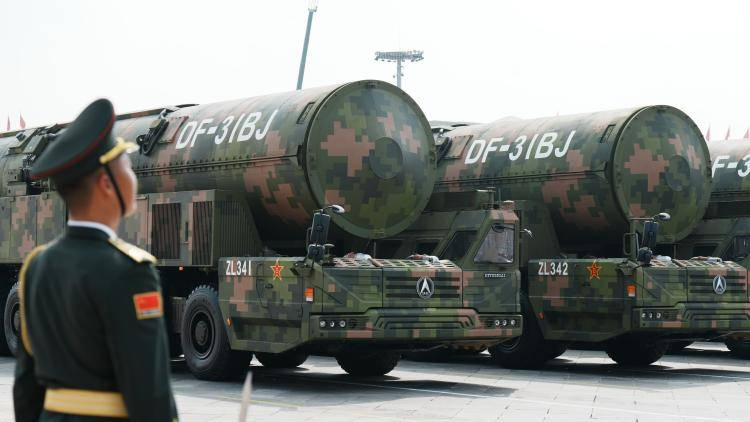
Another contentious issue is whether or not China has conducted low-yield nuclear tests. Earlier this year, at a session of the Conference on Disarmament at the UN in Geneva, the US accused China of conducting secret nuclear tests.
China denies these accusations, and the CTBTO, which monitors compliance with the Comprehensive Test Ban Treaty, has not been able to substantiate the US allegations. If the US pushes too hard on this point, it could break the talks prematurely.
Finally, the US’s Asian allies will be watching the talks anxiously. Taiwanese leadership is nervous about potential concessions on US arms sales to Taiwan, or any changes in US language about Taiwanese independence.
South Korea and Japan will be concerned about any signals that the US is willing to accommodate Chinese claims over the Pacific. Such concessions could increase the risk of proliferation in the region. And concessions would not be domestically popular for President Trump either. But the Iran war is unpopular too. And the president may prioritize positive optics at the summit and the appearance of a closer relationship with President Xi Jinping.
The differences between the sides are clear. And the Chinese refusal to discuss stockpile numbers is a barrier to the kind of wide-ranging agreement on nuclear weapons Trump has talked about desiring.
But the pace of AI and other technological development introduce significant new risks, complicating old assumptions about preventing escalation between rival nuclear armed countries.
Any progress on identifying misunderstandings about each side’s threat perceptions will be a significant contribution, at a time when a new arms race is a real and pressing concern.
https://www.chathamhouse.org/2026/05/xi-and-trump-wont-discuss-chinas-growing-nuclear-arsenal