
Activity at Pankavo test site intensifies ahead of Trump-Putin talks in Alaska
By – Kieran Kelly
15 August 2025 10:31am BST
Vladimir Putin has been preparing to test a new nuclear-armed cruise missile ahead of his meeting with Donald Trump in Alaska.
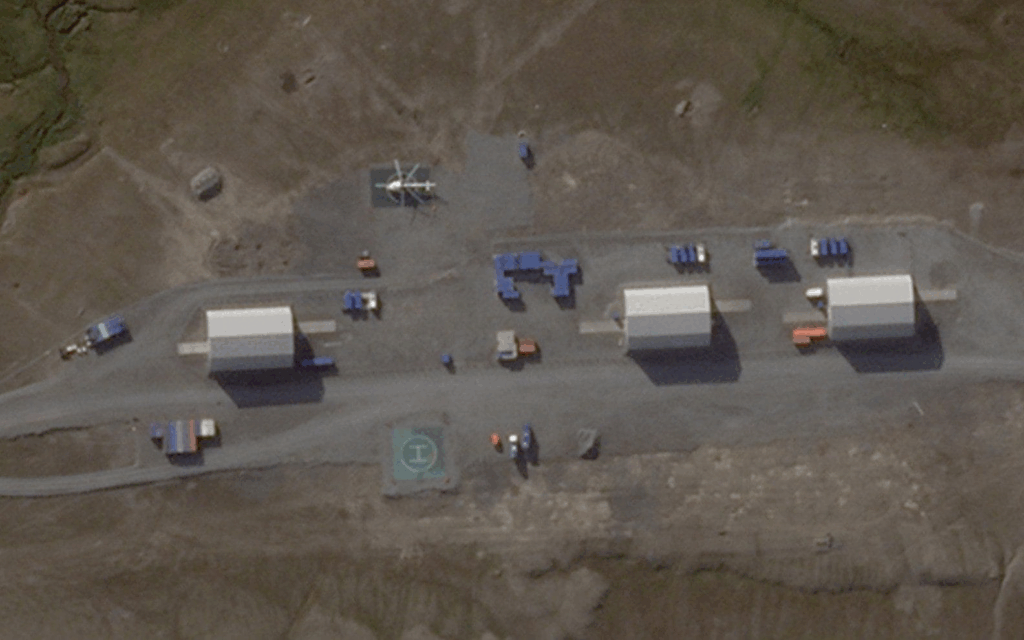
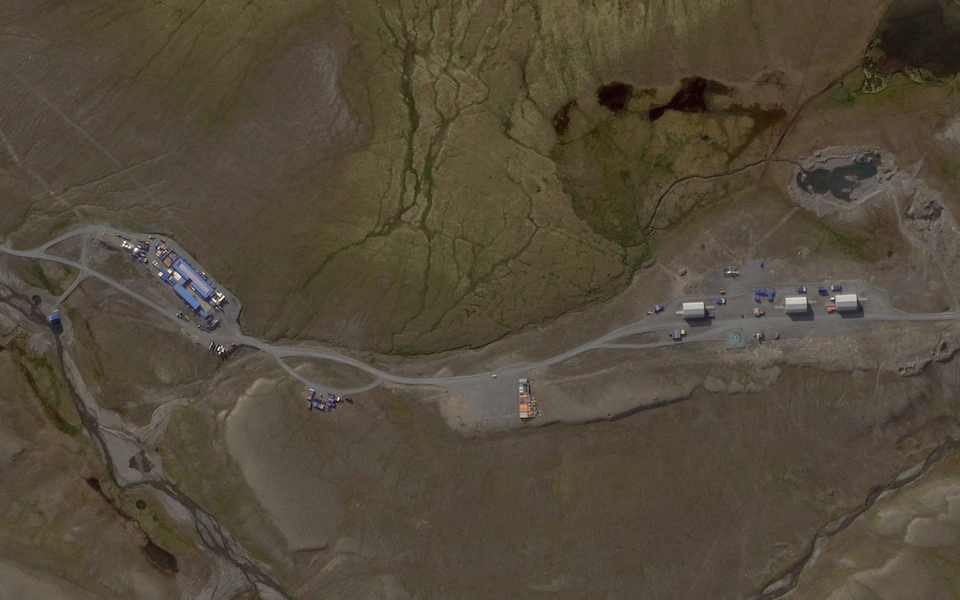
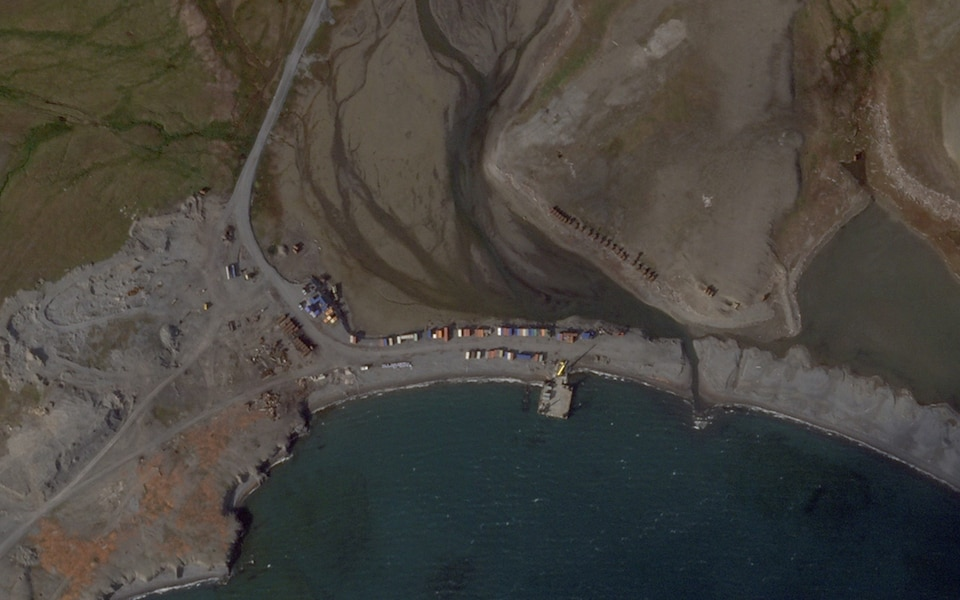
Russia’s Pankavo nuclear test site, located on the Barents Sea archipelago of Novaya Zemlya, has seen a surge in activity in recent weeks, satellite images show.
The site has seen an increase in personnel and equipment, as well as ships and aircraft associated with earlier tests of the 9M730 Burevestnik (Storm Petrel).
A Western security source said that Russia was preparing a test of the Burevestnik missile, which Moscow claims has an unlimited range.
The tests have been taking place in the days leading up to crunch talks between Mr Trump and Putin in Anchorage later on Friday.
“We can see all of the activity at the test site, which is both huge amounts of supplies coming in to support operations and movement at the place where they actually launch the missile,” Jeffrey Lewis, one of the researchers involved in analysing the satellite images, said.
Mr Lewis, of the California-based Middlebury Institute of International Studies, said a test could be carried out as soon as this week.
Putin is preparing to meet with Mr Trump at a US air force base in Alaska later today, though he is currently in the town of Magadan in Russia’s Far East for a meeting with the local governor.
The summit between the two leaders is scheduled to take place at 11.30am local time (8.30pm BST) at the Joint Base Elmendorf-Richardson in Anchorage.
Speaking to reporters in the Oval Office on Thursday, the US president said: “I am President, and he’s not going to mess around with me.”
Mr Trump said he expected the meeting with Putin to be followed up almost immediately with a summit involving Volodymyr Zelensky, the Ukrainian president, and potentially other European leaders.
“The more important meeting will be the second meeting that we’re having, we’re going to have a meeting with President Putin, President Zelensky, myself and maybe we’ll bring some of the European leaders, maybe not,” he said.
Ahead of the talks, Oleksiy Goncharenko, the MP for Odesa in Ukraine, said he feared a deal being made without Ukraine.
“We have hope that the war will end…but there are fears that Putin will manage to win more time and play games with Trump – and that Trump will allow it,” he told The Telegraph.
He added that the “worst case scenario” would be if Mr Trump and Putin agree to a deal that Ukraine cannot accept.
“Nobody can decide anything about Ukraine without Ukraine. If we lose US support, this would be a disaster.”
While their meeting will primarily focus on the war in Ukraine, Mr Trump and Putin are also expected to discuss a nuclear arms deal as part of a wider effort to strengthen peace.
Speaking on Thursday, the Russian leader said the meeting was happening “in order to create long-term conditions for peace between our countries, and in Europe, and in the world as a whole – if, by the next stages, we reach agreements in the area of control over strategic offensive weapons”.
Moscow and Washington have by far the biggest nuclear arsenals in the world. The last remaining treaty between them that limits the numbers of these weapons is due to expire on Feb 5 next year.
The New START treaty covers strategic nuclear weapons – those designed by each side to hit the enemy’s centres of military, economic and political power – and caps the number of deployed warheads at 1,550 on each side.
Experts believe both are likely to breach that limit if the treaty is not extended or replaced.
Putin has said the Burevestnik missile, dubbed the SSC-X-9 Skyfall by Nato, is “invincible” to current and future missile defences, with an almost unlimited range and unpredictable flight path.
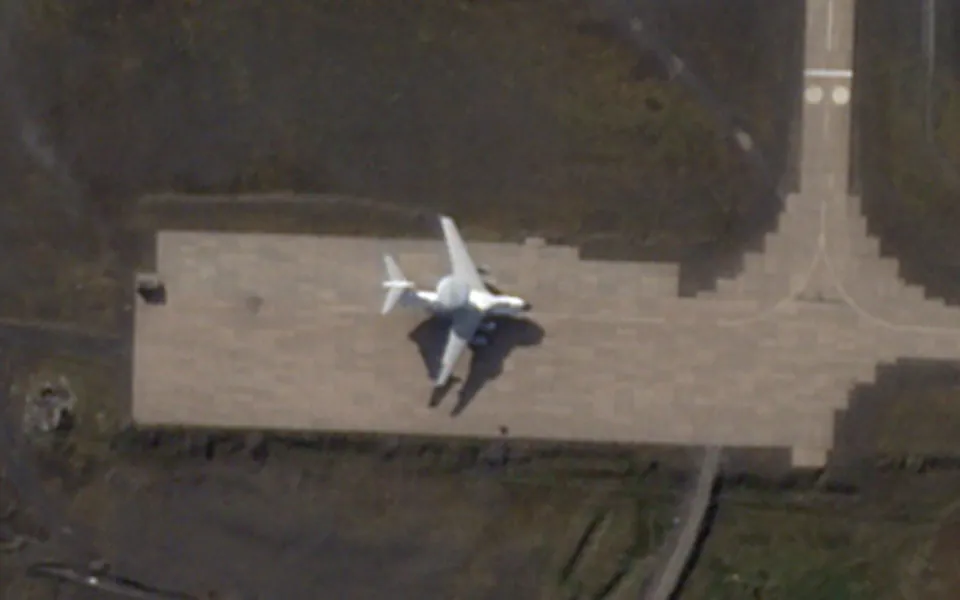
Two aircraft designed to gather test data arrived at the Rogachevo military airfield in mid-July, pictures published by Reuters show.
The Norwegian military said the Barents Sea was a “prime location for Russian missile tests” and they had indications from notices and maritime warnings of “preparations for test activities”.
However, it did not confirm “any knowledge of what kind of munitions they are to test”.
It comes against the backdrop of increasing nuclear tensions between the two nations.
Mr Trump announced earlier this month that he had ordered the deployment of two nuclear submarines towards Russia in response to threats from the country’s former president.
The US president said he was sending the vessels to “appropriate regions” in a move that broke decades of Pentagon secrecy around high-level deployments.
It came after Mr Trump engaged in a war of words with Dmitry Medvedev, the former Russian president and the deputy chairman of the country’s security council.
According to Mr Lewis, Russia’s plans to test the Burevestnik have intensified since Mr Trump returned to the White House and announced the development of an American Golden Dome defence shield.
Putin is known for his bellicose nuclear rhetoric. In 2018, he used a concept video of nuclear warheads with an unlimited range apparently raining down on Florida, where Mr Trump’s Mar-a-Lago estate is based.
Fiona Hill, Mr Trump’s former Russia advisor, previously told The Telegraph that the footage “got Trump’s attention” and is the reason he is so “deferential” to Putin.
The Burevestnik has a poor test record, according to the Nuclear Threat Initiative advocacy group, with two partial successes among 13 known tests.
It comes after Belarus announced that it would hold joint exercises with Russia next month involving nuclear weapons and the Russian-made, hypersonic Oreshnik missile.
“This is an important element of our strategic deterrence. As the head of state demands, we must be prepared for anything,” Viktor Khrenin, Belarus’s defence minister, said on Wednesday.
“We see the situation on our western and northern borders and cannot calmly watch the militarisation and military activity. We demonstrate our openness and peacefulness, but we must always keep our powder dry.”
Belarus borders Poland, Lithuania and Latvia – all Nato members – to the west and north, while in the south it borders Ukraine.